
Introduction
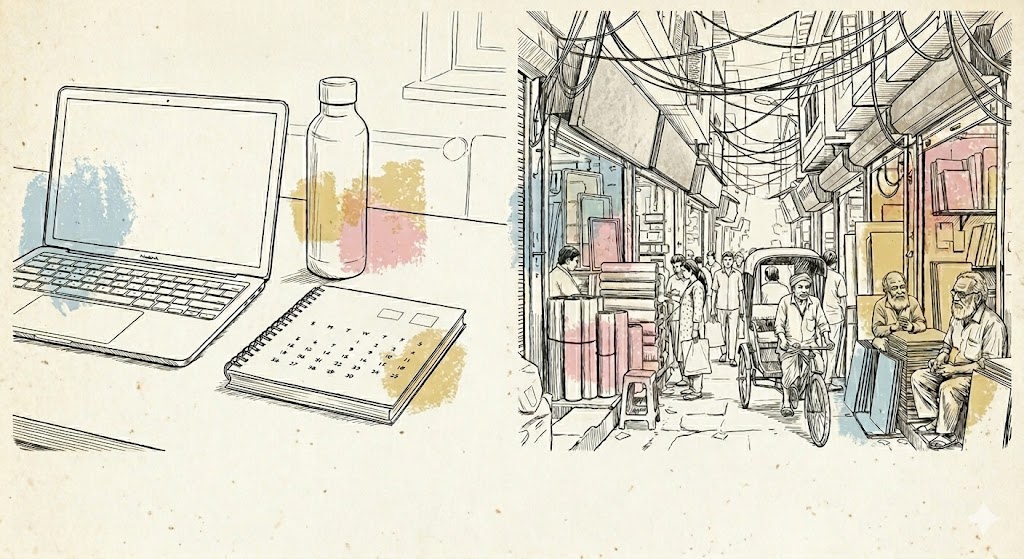
If you looked at my calendar yesterday, you’d see a beautifully color-coded block of calendar ladders: back-to-back syncs, a clean Excel sheet, a stream of Outlook notifications, and the steady, humdrum glow of a laptop screen. It’s a comfortable AC world, but sometimes that laptop screen completely engulfs you. Like, literally.
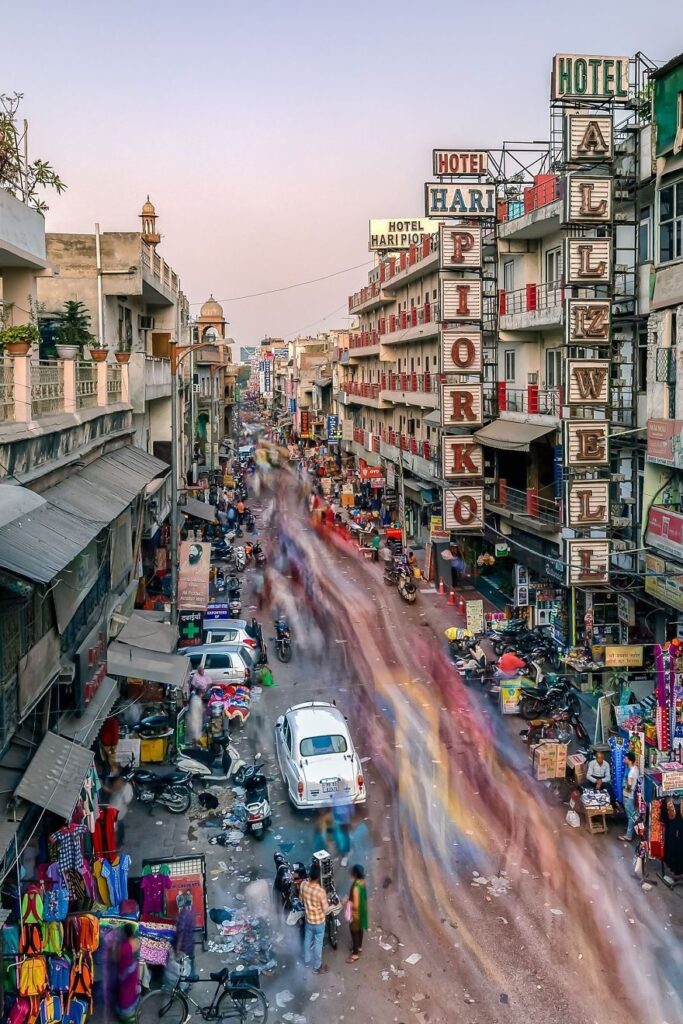
Today, everything changed. I stepped completely out of my corporate bubble and into the chaotic, electric heart of Chuna Mandi, the famous acrylic sheet market in Paharganj, Delhi.
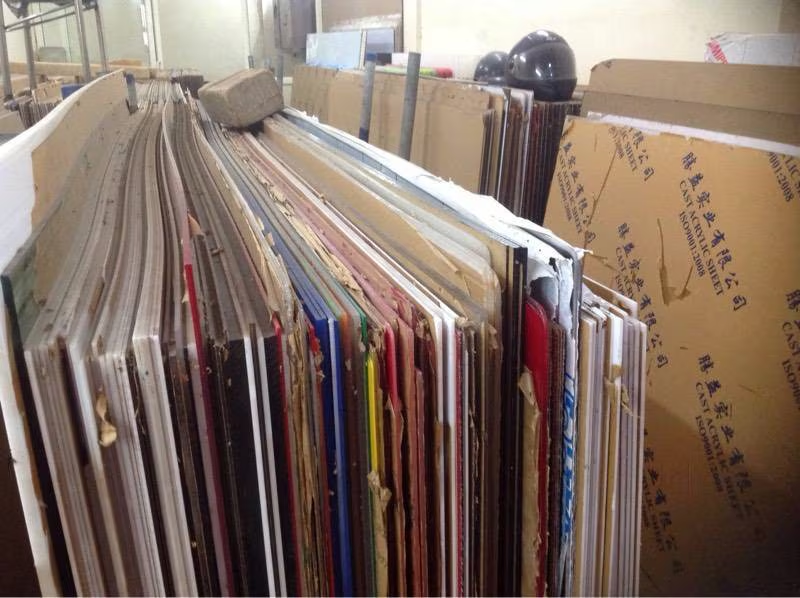
I was accompanying a friend to source raw materials for their new startup. We weren’t clicking “add to cart” on Amazon; we were on an expedition to buy thick, raw acrylic sheets right from the source.
History of Paharganj: From Mughal King’s Market to Wholesale Hub
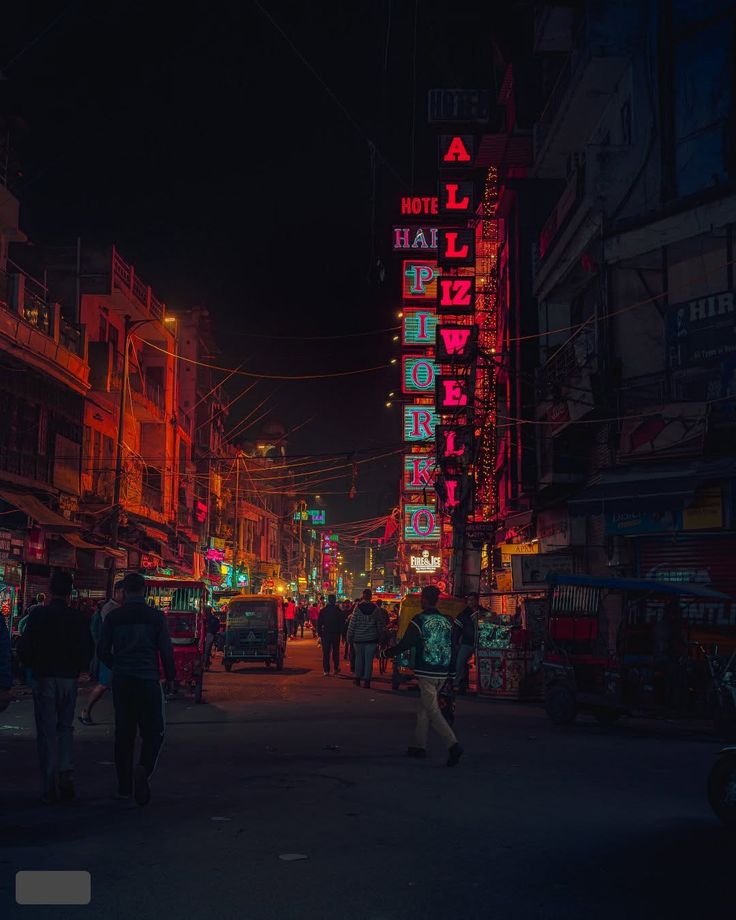
To understand Chuna Mandi, you first have to understand Paharganj. Long before it became a famous hub for global backpackers, budget hostels, and the bohemian, gritty backdrop of movies like Dev.D, it held a massive place in Delhi’s history. “Paharganj” literally translates to “Hilly Neighborhood,” named because of its proximity to Raisina Hill. Back in the 1700s, it rested just outside the grand Ajmeri Gate of Shahjahanabad, serving as the only major market outside the walled Mughal city. It was once called Shahganj, the King’s Market.
Today, that imperial title has evolved into a different kind of royalty: the absolute kings of signage, raw materials, and plastics. Chuna Mandi is the undisputed regional hot spot for anything and everything relating to acrylic, vinyl, and neon.
Inside Chuna Mandi: The Acrylic Sheet Market in Delhi
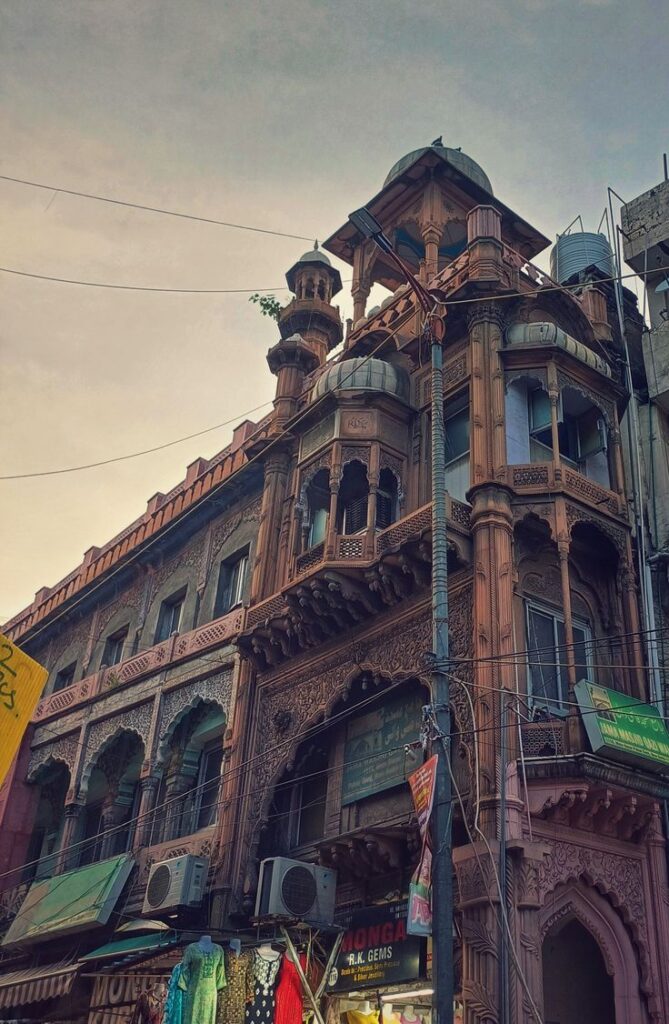
Stepping into this market was idiosyncratic. The lanes are narrow, dingy, and entangled in a web of overhead wires, contrasting sharply with our AC cabins with perfect lighting and screens lit up just enough to darken the faces. There are myriad shops packed tight against each other, displaying a plethora of acrylic sheets – clear as glass, opaque, neon greens, deep blues, frosted textures, and mirrored surfaces. Some of these shops were as small as a matchbox, yet they pull in a monthly turnover of 40 to 50 lacs, hitting up to a whopping 5 crores annually!
Paharganj: The Ecosystem
But as I stood there, watching the madness unfold, I realized I was looking at a perfectly tuned, hyper-collaborative ecosystem.
In our corporate offices, different departments work in silos, often separated by floors, emails, and miles of red tape. Here, the entire supply chain lives within a 50-meter radius, bound together by mutual reliance. The business owner sells the raw sheets, the rickshaw puller transports them safely through impossible crowds, and the cutters and fabricators deliver the exact size needed on the spot.
In corporate life, our days are dictated by the clock. We wait for the 1:00 PM lunch hour. We look forward to log-off time. But Chuna Mandi has no clock. The energy here ebbs and flows based on one thing only: momentum. The energy is visceral and electrifying.
As I was imbibing the ignition of the place, I watched my friend interacting with the business owners there. In the corporate world, we talk endlessly about “networking,” and “stakeholder management.” We send formal emails and schedule brief teams calls. But watching my friend talk to those shopkeepers showed me a completely different side of commerce, one they never teach you in an MBA program or a corporate office.
There was a raw, genuine human connection in every single interaction. I noticed how naturally my friend unfolded every conversation with them to exchange information. Every Rupee being exchanged carried the weight and value of the words spoken before it. Trust wasn’t established through a Teams call; it was weaved.
We stood in those narrow, dingy lanes where the cutting machines went churn-churn-churn, filling the air with a deafening racket. Within minutes, tiny, static-filled acrylic particles were floating everywhere, settling on our clothes like fine bits of thermocol.
In my air-conditioned office, everything is sanitized. We hide behind digital screens and smooth corporate etiquette, completely insulated from the raw reality of creation. Connections are draped in suits and ties. But out here, people with experiences, knowledge and years of wisdom are sitting in small shops, probably not the CXOs of a company but architects of some very peculiar niche industries.
By the time we left, my throat was dry, but my brain felt wider awake than it had in months. My clothes were covered in plastic dust, but I felt fulfilled, productive, and like I had finally done something real.
So, what’s your reason to leave your laptop?
Bài viết chia sẻ khá chi tiết, đặc biệt phần hướng dẫn về pikashow github rất hữu ích cho người mới bắt đầu. TONY08-26
Trải nghiệm người dùng rất tốt cricify tv download TONY08-03
Mình thường tìm hiểu review trước khi tham gia và hiện tại thấy picasso apps là lựa chọn khá đáng tham khảo. TONY07-20
Hệ thống anti-fraud của 188v phát hiện gian lận tự động – bảo vệ quyền lợi người chơi trung thực một cách tối đa. TONY07-05
Sau khi tham gia 888slot com link , mình thấy tốc độ phản hồi khá nhanh. TONY06-29
Tỷ lệ hoàn tiền có thể dao động từ 5% đến 10% tùy vào sự kiện trò cụ thể. slot365 tải Điều này không chỉ giúp người tham gia giảm bớt áp lực khi thua cược mà còn tạo thêm cơ hội để họ quay lại các trận đấu giành chiến thắng. TONY05-28
Mình đánh giá cao slot365 com vì tốc độ phản hồi khá nhanh khi sử dụng lâu. TONY05-22
Elegantly composed !!
Nicely penned, resonated with everything.
You have the observation of a hawk. This article of yours has gotten me starstruck .Nobody would have written this better than you. So happy I was a part of this experience and I could give you a reason to start rewriting your amazing blogs.
Thank you, means a lot